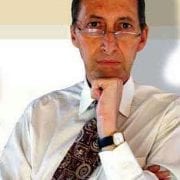

Francis Okello’s journey from the lakeshore to the boardroom
Francis Okello has just launched his autobiography, titled CONCERT OF LIFE – From the Lakeshore to the Boardroom, and what a story it is. Like so many of our most prominent Kenyans, his life began in a village. But his ancestors were anything but simple. On the contrary, Okello traces his Luo lineage back several centuries, to South Sudan, with so many who preceded him being Chiefs and in other significant positions. A tremendous amount of research has gone into spelling out the specifics of it all.
The next section of the autobiography goes into his childhood in a small village, Nyangera Daho, on the shores of Lake Victoria (Nam Lolwe), where his disciplinarian father enjoyed his 16 wives, of whom Okello’s mother was one, and their 33 children. His father, a respectable Chief of sound values, was of great positive influence on him and his brothers and sisters. Much more on his education follows, climaxing at the “intellectual cauldron” of the University of Dar, and on to Princeton University in America.
Since then Okello has spent more five decades in various sectors of Kenya’s economy, including prominent positions in banking, media, tourism, energy, manufacturing, infrastructure, education, and not-for-profits, as well as youth empowerment, environmental stewardship and policy formulation. Through this he contributed to the evolution of the private sector and its role in the country’s economic development, and his book explores the intersection of politics, economics, law and culture that shaped his perspectives and influenced the organisations with which he became associated.
I now wish to share with you something about his engagement with the Nation Media Group (NMG), one of his several within the Aga Khan Development Network. It began in 1989, when he was invited to become a non-executive director of Nation Newspapers Ltd, and evolved in 1995 when he joined the main Nation Media Group Board as the Chairman of its Editorial Board Committee, which position he held since its inception in 1995 till he retired in 2024.
It was in this capacity that I got to know Okello, as we used to be together for the few years when then CEO Linus Gitahi hosted us columnists every couple of months or so for an exchange of views. NMG chairman Dr. Wilfred Kiboro and Okello were with us from the board, and each of those meetings was intellectually stimulating.
Okello has an interesting section on the relationship between the media and the state, which is often characterised by tension. The media is supposed to hold those in leadership to account, preventing it from being too comfortable with the state. But it must also maintain a working relationship of mutual respect with those in power, he points out, one that is managed responsibly and is in the interest of the larger public.
In its game of survival, the media must be sensitive to the politics of the day, neither capitulating to authority nor being too soft. He remembers Uhuru Kenyatta’s displeasure in referring to newspapers as being “only good for wrapping meat”, and these days we worry about Trump’s pressure on his domestic media to be nice to him.
In the 2007/8 post-electoral violence Okello played a supportive role in the work of Concerned Citizens for Peace (CCP), where I was the member representing the private sector. He wanted to see what NMG could do to help restore peace. So wearing his two hats, one for NMG, the other as chairman of Serena Hotels, he and then Group CEO Linus Gitahi, drove to Serena Hotel where they met with some of the CCP leaders. They decided to help us by covering our initial expenses, including for our meeting room there, which later became called the Amani Room.
Okello concludes his book by outlining the leadership challenges and lessons from his life. He tells us we must accept that we live in a VUCA (Volatile Uncertain Complex and Ambiguous) world; that we need patience, agility and resilience; and we must be curious and willing to learn – including from our children and grandchildren. We mustn’t shy away from challenges, like giving high level talks, accepting high level responsibilities in domains we are less than familiar with; and we must be willing to serve.
He calls on us to nurture enduring relationships, and places a premium on integrity, diligence and discipline. Share knowledge, he encourages – including through the Leaders Circle meetings which I co-host and about whose sessions I have written several columns here and where Okello is an active participant. And adopt an interdisciplinary approach to problem solving, noting that “a Jack of all trades is master of none, but oftentimes better than a master of one”. At strategic leadership levels, he insists, generalists are to be preferred over specialists. He argues a case for us to be intentional in becoming polymaths. I related to his assertion that the leader should be like the conductor, who plays no instrument but guides the ensemble to play in harmony. Hence the title presumably, CONCERT OF LIFE.
Finally, let me refer to the forewords by Willy Mutunga and Sunny Bindra, who each wrote very positively about Okello, including referring to his integrity and modesty. That is the Okello I also know and respect.