
Governance and individual responsibility
In my last column I started writing about the event branded “Sustainability, Governance and You: Unlocking Organisational Excellence with ISO 37000” that was co-hosted by Scribe Services and FluidRock Governance Group, at which I was a panelist. In that article I focused on how the first keynote speaker, FluidRock Executive Chair Annamarie Van der Merwe, took us through the evolution of how societies expect businesses should behave, including highlighting the basics of the ISO 37000 international guidelines on good governance.
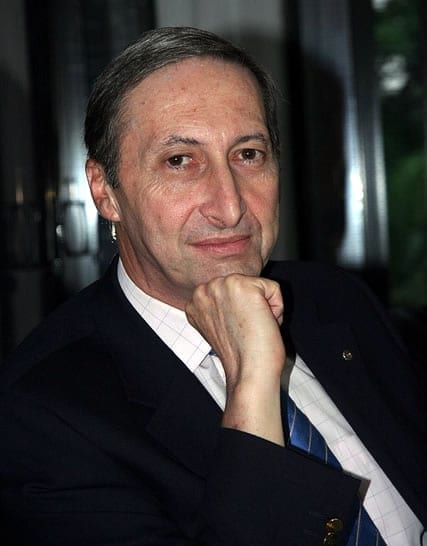
Now to the second keynote speaker, Dr Julius Kipng’etich, who launched his talk by contrasting the development of Singapore to that of Kenya. Both our per capita GDPs were $400 sixty years ago, but while ours is now $2,000 theirs is $87,000. According to him, the difference is explained by the contrasting quality of governance – very much reflected in how much inequality exists in the country.
This led Dr Kipng’etich straight to the ISO 37000 guidelines on governance which, he told us, boil down to the desireable values and behaviours of individuals, from CEOs to managers to messengers. What is required of them all is this: results, compliance with the law, ethical conduct, and doing sustainable long-term good. In Kenya, it’s very challenging, as we have to deal with extreme inequality, plus a culture of materialism, the collapse of traditional governance systems, and an “anything goes” attitude that’s facilitated by impunity.
Our task is to get the right people in our institutions, ones who will support good governance and enforce the law, he stated. This requires us to recruit for character, and then to induct, train, develop and maintain such good people. We must define minimum standards, and reward those who do the right thing. We also need a transparent environment, one where people speak up if something is wrong – to which ISO 37000 devotes a whole chapter. And it is the leadership team that must role-model and nurture a culture of healthy values, behaviours and habits.
Dr Kipng’etich then talked about The Blue Company, which attracts member organisations that apply the principles of good governance, and he concluded by again stating that our focus should be on us as individuals, as systems are just enablers.
The final stage of the event was the panel discussion of which I was part, along with Mary Ann Musangi, the Managing Director of Haco Industries, and Collins Kinoti, Scribe’s ESG and Sustainability Adviser. Our moderator Alice Ayuma first asked us what makes good governance such a challenge. Carrying out stakeholder engagement, suggested one panelist, and I talked about the need to bring more organisations and individuals with healthy values together, in order to develop a critical mass that can make a significant difference nationally.
The next question was about the future of governance, where what we see is that organisations of any kind must take into account the fact that stakeholders are increasingly making their decisions as to whether to engage with them or not based on how ethically and responsibly they behave. Are they sensitive to the environment? Do they treat their staff and the communities within which they operate with care? Are they trustworthy, transparent and accountable? And so on.
In a way though, good governance and responsible leadership are timeless phenomena. From mankind’s earliest days we have preferred to deal with honest, trustworthy people, and they are the ones with whom we will do repeat business. The win-lose deal-makers – like Trump – may enjoy an initial victory over another party, but will those “losers” be up for another engagement? Not if they can avoid doing so.
There was considerable discussion on governance at the national level, where it was noted that just one person, the leader, can make all the difference, as happened in Singapore with Lee Kwan Yu and in Rwanda with Paul Kagame. These leaders introduced discipline into their cultures as a habit, and where discipline is rewarded and indiscipline penalised. They know when to say “No”, and this leads such countries to be well-placed on Transparency International’s Corruption Perception Index. In Africa, Mauritius, Botswana and Rwanda rate relatively highly, while Kenya is much further down.
To promote sustainability, one must invest in systems, develop a healthy culture, and nurture a pipeline of leaders (a challenge in Uganda, and maybe in Rwanda too). Mention was made of those like Museveni who refuse to step down, and who surround themselves with compliant sycophants.
In just two and a half hours so much ground was covered, so much food for thought offered, so much constructive conversation enjoyed, neither too optimistic nor too pessimistic.


